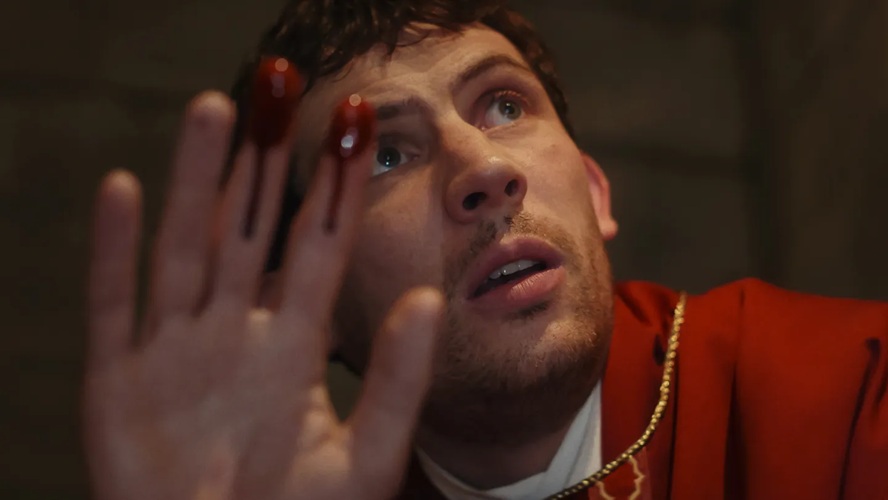
This annual Arts & Faith project enters its second decade this year, making it an apt time to summarize its purpose and methodology. The jury attempts to identify ten films released or distributed in the previous year that it recommends to Christian audiences. The reasons for such recommendations can be quite varied, especially given that Christians differ in their artistic sensibilities and social assumptions. Many films will have overtly religious content, but others may be about topics that are timely or illustrate perspectives that Christians might find timely. Dallas Willard suggested in The Divine Conspiracy that “sometimes important things can be presented in literature or art that cannot be effectively conveyed in any other way.” As our social discourse and, especially, our political discourse become more polarized, works that invite us to reflect as well as affirm, to question as well as assent, to celebrate as well as condemn, become ever more valuable.
Jurors’ appreciations of particular films can be read by clicking on the hyperlink(s) when available.
- Wake Up Dead Man
- Train Dreams
- Sinners
- It Was Just an Accident
- The Phoenician Scheme
- Frankenstein
- A Little Prayer
- The Life of Chuck
- Sentimental Value
- Superman
Members of the 2025 Arts & Faith Ecumenical Jury: Kenneth R. Morefield: Aren Bergstrom; Prisca Bird; Mitchell Capps; Evalyn Cogswell; Neil R. Coulter; Brian Duignan; Lindsey Dunn; Andrew Eisenmann; Gareth Higgins; James Smoker; Christian Jessup; Douglas MacLeod, Jr.; Noel T. Manning, II; Thomas Manning; Anand Venigalla; Sam Williams; Tynan Yanaga.
Ken Morefield and Noel Manning, II discuss the 2025 selections:
Jurors’ Honorable Mentions:
Deaf President Now! — Though this year’s Ecumenical Jury didn’t select any documentaries, a number of hidden treasures await you on each streaming platform—such as Deaf President Now! (Apple TV+). The film takes its title from a 1988 protest among students at Gallaudet University in Washington, DC. Though Gallaudet was the world’s first university for Deaf students, the school had never been led by a Deaf president. Campuswide protests ignited with the upcoming appointment of yet another hearing president. To say more is to spoil the journey of the documentary, guided by four of the people who, as students, took on leadership of the protests. Codirected by Nyle DiMarco (Deaf) and Davis Guggenheim (hearing), the filmmaking process itself models the kind of conversation that we’re intended to carry on, now that we know this story. The film has all the drama and excitement of a sports movie, but its tidy, focused story doesn’t trivialize the ongoing complexity of representation and mutual understanding. One of the questions it left me with is this: What joys are we, as individuals and churches, missing out on when we surround ourselves with people like us instead of seeking to learn the stories of others? — Neil R. Coulter
Thunderbolts* — As I walked away from Thunderbolts I was reminded of the shared brokenness of humanity and the quiet strength found in community. These MCU heroes aren’t defined by virtue, but by their very wounds—shaped by regret, trauma, and choices they’re unable to undo. What ultimately gives the film its weight is the recognition that true healing doesn’t happen in isolation or solitude. Again and again, Thunderbolts offers a truth that can be deeply rooted in the Christian walk: we are not meant to carry our hurt alone. Strength emerges not from self-reliance, but from choosing to come together in our pain and despair, to share the burden, and to accept help even when we want to resist it. We are all imperfect, yet through Christ and the community created through His love, we can know that we are not meant to walk this journey alone, nor should we. — Noel T. Manning, II
Eephus — “I believe in the Church of Baseball” goes the famous opening narration in Bull Durham, perhaps the most famous baseball movie of them all (aside from Field of Dreams). Bull Durham might be the best baseball movie, but Eephus is the film that best understands the Church of Baseball. This independent debut feature from Carson Lund follows two recreational baseball teams playing the final game on a New England field that’s set for demolition. There’s essentially no plot to Eephus as the entirety of the film is the game from first to last inning. But therein lies the point.
Baseball is the most liturgical of the sports in form and function. Every pitch is like a sacred ritual played out for the adoration of the fans who watch like rapt parishioners. The meaning of liturgy is to habituate the engagement with the sublime, and for the men in Eephus, the game of baseball is just that: a means of adding meaning to the mundane. They’re getting up there in years. Their lives might not be all they had dreamed up. But for a few hours every Sunday in the summer, they can freeze the passage of time and experience the transcendence of pitching and hitting, throwing and catching, following the arcane rules of a sport that seems as intrinsic to America as the Church.
Baseball is the only of the major four North American sports without a clock during play (MLB did add a pitch clock to start play in 2023), and so, it’s the only sport where the length of the game is dependent on the players. If the players play the game a certain way, it can go on forever. So in Eephus, the players desperately try to extend the game to keep the field alive and, so, stop the cruel march of time. But time, it seems, waits for no man. The game, like life, always ends. — Aren Bergstrom (3 Brothers Film)
Mr. Scorsese — He’s Mr. Scorsese to me and you, but he’s Marty to his friends, just an ordinary guy from Queens who happens to be one of the most acclaimed filmmakers in cinema history. Rebecca Miller’s five-part documentary series on Marty starts in his childhood and traces his life and work through to his most recent film, the painful but necessary Killers of the Flower Moon. We get interviews with Scorsese’s childhood friends, his children, his contemporaries—Steven Spielberg, George Lucas, Frances Ford Coppola, Brian De Palma—, and his closest artistic collaborators—Robert Deniro, Leonardo DiCaprio, Thelma Schoonmaker, and Rebecca Miller’s husband, Daniel Day Lewis, among others. Scorsese himself speaks a great deal as well, providing deep insight that only he could give and adding important context to his life and 62-year career.
For film lovers, there’s a wealth of information about the behind-the-scenes drama and the often-fraught artistic process that resulted in a plethora of beloved films. For people of faith, it’s incredibly fascinating to hear Scorsese talk about his own faith and how it has shaped his work. Martin was raised Catholic and considered becoming a priest. He was the well-behaved, righteous kid in a neighborhood full of thugs and gangsters. As a director, he’s shepherded many dark, violent, and deeply immoral characters into the world, in films that have, at times, divided viewers. Even when Scorsese is not exploring faith directly in films like Mean Streets, The Last Temptation of Christ, Kundun, and Silence, it’s clear that his belief in goodness and evil, in light and dark shapes his work. Even for those who can’t stomach Scorsese’s most brutal films, it’s valuable and enriching to hear an artist talk through that ever-present dichotomy in his work and in his own life. — Sam Williams
Ballad of a Small Player — In Ballad of a Small Player, Colin Farrell delivers an outstanding performance as Lord Doyle, a broken and desperate gambler running from his past and his debts. While on the surface it follows a man in over his head, the film serves as a powerful metaphor for the crushing cycles of addiction and sin. Frequently labeled a “lost soul” by those around him, Doyle himself admits that “it would take a miracle” to be saved. By placing these themes at its very heart, the film asks viewers to reflect on the nature of redemption and what it truly takes for a person to find salvation. — Christian Jessup
Sketch — We can use our imaginations to destroy ourselves, but we can also use them to save the world. The first echoes the great fall, while the second echoes a God whose grand imagination brought forth the saving Christian gospel. Seth Worley’s marvelous film Sketch seems to understand this dual power of imagination. In the film, 10-year-old Amber must reckon with both the darkness and the bright gifts of her own mind after sketches she has made of monsters begin to come to life. The movie brings that narrative idea to life with both masterful animation and deep wisdom. For those with eyes to see, this is a meditation on the pitfalls but also the beauties and saving graces of imagination. – Brian Duignan
One Battle After Another — “All Hail St Nick.” is the thinly veiled praise for Satan proclaimed by the elite cabal steering the events of One Battle After Another, one of the best films of the year and of the decade. They are both collaborator and judge of Colonel Lockjaw, the federal immigration commander conducting a Herod-esque raid to find the child that stands between him and power. When this child speaks of a queer person in front of him, this satanist cries out “Is that a joke on God?” The man in murdering and invading in order to join a group of white supremacists, but he uses offense at God as cover for his own personal offense. Then, he returns to hurting a young girl in the chapel, a crowd of nuns’ hands tied outside. One Battle After Another has lots to say about race, the power dynamics of gender, about immigration, violence, justice, and truth. It’s a forever film that your children’s children will read about, and as such, it is already worthy of your engagement and attention. But this film also uses performance to render a complex picture of hypocrisy that many Christians look away from: just because someone says they believe in God, just because they say their actions are meant for His glory, that does not mean it is true. Look to the actions, consider their origins and their result, and ask yourself: do you take communion with a Colonel Lockjaw? I know that I have. — Andrew Eisenman
Secret Mall Apartment — What begins as a cute little “because it was there” backstory about one of those too-funny-to-be-true human interest stories, transforms, in one hundred minutes into a mediation on some surprisingly deep questions. What makes life worth living? Is it possible to make a space for yourself, literally and figuratively, in a world that seems to have no space for you? — Kenneth R. Morefield
Avatar: Fire and Ash — Seek, and ye shall find. When I walked away from my initial viewing of James Cameron’s Avatar: Fire and Ash, I described the film as “an epic search for the face of God.” Granted, this is not necessarily the god of any religion that we know on Earth – Christianity or otherwise. Rather, it is Eywa, the Great Mother of Pandora, with whom the Na’vi natives across diverse tribes and ecosystems have an increasingly complicated relationship. But perhaps no character is more perplexed by Eywa than young Kira (Sigourney Weaver). To put it in Christian terms, she is a young woman after God’s own heart. Kira pursues Eywa with all of her heart, soul, and mind. And yet, Eywa often feels just out of reach. Have Kira and her family been forsaken by their god? Will Eywa do nothing as
evil prevails and Pandora is razed by dark forces from outside and within? Kira’s faith is shaken to its core, but she never walks away from her journey to find Eywa. She fights the good fight and remains steadfast amidst the winds of despair. Kira may not find Eywa where she wants to, but she finds Eywa exactly where she needs to. — Thomas Manning
Cloud — Brian Tallerico, writing for RogerEbert.com wondered, “Is [Kiyoshi] Kurosawa suggesting that any sin at all paves the road to Hell?” It’s a strong question and speaks to the fact that this is one of a few films to take the subject of sin seriously in a long time. A person may find themselves contending for Yoshii’s behavior as an online reseller with questionable tactics. “Buyer beware,” I even said aloud at one point. The name of the game is profit. Sure he stretches the truth here and there. And anyway he’s assuming the risk. And who was twisting their arm to buy or sell? “Am I so bad?” he asks his assailants. Assailants because he eventually gets doxxed and things escalate fast. His hired-then-fired assistant Sano becomes his man Friday in the end, ultimately becoming pivotal to his survival. Suspicions of parable are confirmed in a finale that’s so chilling that it’ll put claws in your heart and ice in your veins. A guardian demon gives passive advice on how to get to hell and the viewer interprets: small compromises, get rich quick schemes, casual betrayals, listless lusts, muted arrogance… “The heart is deceitful above all things, and desperately wicked: who can know it?” A slow burn, but cold ash and desperate ember in the end. One of the year’s best. — Mitch Capps.
The Testament of Ann Lee — Mona Fastvold directs and Amanda Seyfried stars in the first ever (as I can tell) narrative feature film about the Shaker religion. And she bravely goes full out and films it as a musical. This is an appropriate choice because besides celibacy and expertly crafted furniture, the third thing they became known for was their large, raucous, lively worship service. These gatherings are filmed with the unabashed enthusiasm of a Pentecostal service. The center of this film is the life of the group’s leader Ann Lee. Amanda Seyfried deserves all her flowers for this portrayal which requires athleticism, endurance, humility, and courage. Lewis Pullman also stands out as her brother, a faithful congregant and her constant companion until his death. This film stands out as a landmark story of an important and often misunderstood religious sect. It also may ground viewers to remember what religious persecution actually looks like. — Lindsey Dunn
Little Amélie or the Character of Rain — Blending Studio Ghibli lushness with a helping of French existentialism, Little Amélie or the Character of Rain is an animated standout from 2025. Amélie begins life believing she is God. She is the center of existence, unaware of anything but herself. She is a baby, after all. Little Amélie follows her development from infancy to three-years-old, as she discovers the joys of her senses, being loved, nature, and language. But there are also the devastations of sibling rivalry, parental absence, death, and the loss of home. Particularly poignant is the realization that her Belgian family is not permanently at home where they live in post-war Japan, and not everyone is happy that they are there–it’s a thread that may connect particularly with children of missionaries. Amélie is, of course, not God. In theological terms, she discovers herself in an order of love, one that encircles family, household, and her neighbors across culture and country, all in a film that takes full advantage of animation’s potential for beauty and wonder. — James Smoker